
Dubai has quietly become one of the most crypto-friendly cities in the world. Between the regulatory clarity offered by VARA (Virtual Assets Regulatory Authority), the zero personal income tax environment, and a growing community of traders, investors, and blockchain businesses, it’s no surprise that crypto activity in Dubai has exploded over the past few years.
Whether you’re a resident looking to invest, an expat exploring your options, or someone who just moved to the UAE and wants to understand the landscape, this guide covers everything you need to know about the best cryptocurrencies to consider in Dubai in 2026.
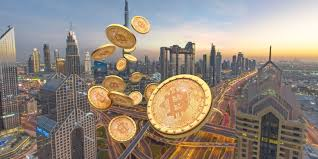
Best Crypto in Dubai in 2026. Dubai is one of the most modern and rapidly growing cities in the world, known for its luxury lifestyle, futuristic architecture, and global business opportunities. Located in the United Arab Emirates, Dubai has transformed from a small desert town into a major international hub for tourism, trade, and innovation.
One of the most iconic landmarks in Dubai is the Burj Khalifa, which stands as the tallest building on Earth. The city is also famous for attractions like the Palm Jumeirah, Dubai Mall, and Burj Al Arab, all of which reflect its focus on luxury and innovation.
Dubai is a major economic center with strong industries in real estate, tourism, finance, and technology. It attracts entrepreneurs and investors from around the world due to its business-friendly policies and tax advantages. The city is also known for hosting global events like the Expo 2020 Dubai, which showcased innovation and culture from different countries.
In addition to its modern side, Dubai also preserves its cultural heritage. Areas like the old Dubai Creek and traditional markets (souks) give visitors a glimpse into its rich history and traditions.
Overall, Dubai represents a unique blend of tradition and modernity, making it one of the most popular destinations for travel, business, and luxury living in the world.
Why Dubai Is a Crypto Hub in 2026
Before getting into specific coins and tokens, it helps to understand why Dubai has become such a significant market.
Regulatory clarity: VARA, established in 2022, has created a licensing framework that gives crypto businesses and investors a clear set of rules to operate under. This has attracted major exchanges, funds, and blockchain companies to set up regional headquarters in Dubai.
Tax environment: The UAE has no personal income tax, which means capital gains from crypto investments are not taxed at the individual level. This is a significant draw for high-net-worth investors and traders.
Access to exchanges: International platforms like Binance, Bybit, and OKX all have a strong presence in the UAE. Local options like BitOasis also serve the region well.
Growing community: Dubai now hosts regular crypto conferences, meetups, and networking events. The city has developed a genuine ecosystem — not just favorable laws on paper.
With that context in place, let’s look at the cryptocurrencies that make the most sense for Dubai-based investors in 2026.
Best Crypto in Dubai in 2026:-
1. Bitcoin (BTC) — The Foundation of Any Crypto Portfolio
There’s a reason Bitcoin remains the starting point for most investors, regardless of where they live. It’s the most liquid, the most widely accepted, and the most institutionally backed cryptocurrency in existence.
In Dubai specifically, Bitcoin has practical uses beyond investment. Several real estate developers in the UAE accept Bitcoin as payment for property purchases — a trend that has grown significantly since 2022. Luxury goods retailers and some hospitality businesses also accept it.

Bitcoin (BTC) is widely considered the foundation of any crypto portfolio, mainly because it is the first and most established digital currency in the world. Created in 2009 by the mysterious figure Satoshi Nakamoto, Bitcoin introduced the concept of decentralized money powered by blockchain technology.
One of the main reasons Bitcoin is seen as a foundation asset is its market dominance and stability compared to other cryptocurrencies. While the crypto market can be highly volatile, Bitcoin often acts as a benchmark, influencing the price movement of many other digital assets. Because of its large market capitalization and global adoption, it is generally considered less risky than smaller altcoins.
Another key factor is its store of value property. Many investors compare Bitcoin to digital gold because of its limited supply of 21 million coins. This scarcity, combined with increasing demand, has made it a popular long-term investment choice for those looking to protect their wealth against inflation.
Bitcoin is also highly liquid and widely accepted across exchanges, wallets, and payment platforms. This makes it easy for investors to buy, sell, or trade at any time. Platforms like Coinbase and Binance have further increased accessibility for beginners and professionals alike.
In addition, institutional adoption has strengthened Bitcoin’s position. Large companies and financial institutions have started investing in or supporting Bitcoin, adding credibility and trust to the ecosystem.
Overall, Bitcoin serves as a strong base for any crypto portfolio due to its reliability, global recognition, and long-term growth potential, making it a preferred starting point for both new and experienced investors.
Practical example: An expat in Dubai DIFC allocates 40% of their crypto portfolio to Bitcoin as a long-term hold, treating it similarly to digital gold — a store of value rather than an active trading position.
Pros:
- Most liquid crypto asset globally
- Widely accepted for real-world transactions in Dubai
- Institutional backing from ETFs, funds, and banks
- Limited supply (21 million coins) provides scarcity value
- Easiest to buy and sell on any exchange
Cons:
- Price volatility remains significant
- Slower transaction speeds compared to newer networks
- High price per coin can feel intimidating for new investors (though fractional buying is available)
- Energy consumption is a common criticism
Where to buy in Dubai: Binance, BitOasis, Bybit, OKX, Rain
2. Ethereum (ETH) — The Backbone of Web3
Ethereum is the second-largest cryptocurrency by market cap and arguably the most important network in the crypto ecosystem. It powers decentralized finance (DeFi), NFTs, smart contracts, and a huge portion of the blockchain applications being built today.

For Dubai investors, Ethereum is interesting not just as a speculative asset but as a utility token. If you’re planning to interact with DeFi protocols, purchase digital assets, or participate in any blockchain-based service, you’ll likely need ETH to pay for transaction fees.
Practical example: A Dubai-based startup founder holds ETH as part of their treasury. They use it to pay for smart contract deployments and interact with blockchain tools their company relies on — it’s both an investment and a working asset.
Pros:
- Powers the largest developer ecosystem in crypto
- The proof-of-stake model makes it more energy efficient than Bitcoin
- High liquidity across all major exchanges
- Strong institutional interest and ETF exposure
- Actively developed with regular upgrades
Cons:
- Gas fees can spike during high network usage
- More complex to understand fully compared to Bitcoin
- Faces competition from faster, cheaper smart contract platforms
- Price is highly correlated with broader market sentiment
Where to buy in Dubai: All major exchanges — Binance, Bybit, OKX, BitOasis
3. Solana (SOL) — High Speed, Growing Ecosystem
Solana has established itself as one of the leading alternatives to Ethereum, known for its fast transaction speeds and low fees. Its ecosystem has grown substantially — particularly in gaming, NFTs, and consumer-facing crypto applications.

In 2026, Solana continues to attract developer attention and retail interest. For Dubai investors who want exposure to a high-growth, higher-risk asset with strong fundamentals, SOL is one of the more credible options.
Practical example: A younger investor in Dubai Marina already holds Bitcoin and Ethereum. They allocate a smaller portion of their portfolio to Solana, treating it as a higher-risk, higher-reward position within an otherwise balanced setup.
Pros:
- Very fast transaction speeds (thousands per second)
- Low transaction costs
- Growing ecosystem of apps, games, and DeFi projects
- Strong retail and developer community
- Available on all major exchanges in the UAE
Cons:
- Has experienced network outages in the past
- More centralized than Bitcoin or Ethereum
- Higher volatility than the top two cryptocurrencies
- The ecosystem is still maturing
Where to buy in Dubai: Binance, Bybit, OKX, Kraken
4. XRP (Ripple) — Popular in the UAE for Remittances
XRP has a particularly interesting position in the UAE. The country has one of the largest expatriate populations in the world, and remittances — sending money home to family in India, Pakistan, the Philippines, and elsewhere — are a massive part of daily financial life.
XRP’s Ripple network is specifically designed for fast, low-cost international transfers. Several financial institutions in the region have explored or partnered with Ripple for cross-border payments. For investors in Dubai who understand this use case, XRP has a clear real-world application.
Practical example: An investor in Abu Dhabi holds XRP both as a speculative position and because they use the Ripple network to send remittances to family. The low fees and fast settlement make it genuinely useful, not just theoretical.
Pros:
- Fast and cheap cross-border transfers
- Actively used by financial institutions
- Strong legal clarity following the US court ruling in its favor
- Large and loyal community
- Available on most major exchanges
Cons:
- Heavily tied to Ripple Labs as a company — more centralized
- The regulatory situation varies by country
- Price has been relatively range-bound compared to other top assets
- Depends on institutional adoption for long-term value growth
Where to buy in Dubai: Binance, Bybit, Kraken, BitOasis
5. USDT / USDC — Stablecoins for Everyday Use in Dubai
Stablecoins deserve a place in this list because they’re genuinely useful for Dubai residents — not just as a trading tool, but as a practical financial instrument.
Both USDT (Tether) and USDC (Circle) are pegged to the US dollar. In a city where a large percentage of residents deal in USD-denominated transactions — real estate, business contracts, international transfers — stablecoins offer a fast, low-cost way to move value.
Many Dubai-based traders also park funds in stablecoins between positions to avoid market exposure without cashing out entirely.
Practical example: A freelance consultant in Dubai receives payment in USDC from a US client. Rather than converting to AED immediately and losing money on exchange rates, they hold the USDC and use it for online purchases or transfer it directly when needed.
Pros:
- No price volatility — pegged to USD
- Fast, cheap transfers across borders
- Accepted on all major exchanges and DeFi platforms
- Useful for parking funds between trades
- USDC is regulated and fully audited
Cons:
- No capital appreciation — you won’t “make money” holding stablecoins
- USDT has faced questions about its reserve transparency in the past
- Not suitable as a growth investment
- Still subject to smart contract risk if used in DeFi
Where to use in Dubai: Binance, OKX, Bybit, BitOasis, and many crypto-accepting businesses
6. Chainlink (LINK) — Infrastructure Play for Serious Investors
Chainlink isn’t a household name the way Bitcoin or Ethereum is, but it plays a foundational role in how blockchain networks connect to real-world data. Its oracle technology is used by hundreds of DeFi protocols and enterprise blockchain projects.
For Dubai investors who want exposure to the infrastructure layer of crypto — rather than just speculative assets — LINK represents an interesting position.
Pros:
- Critical infrastructure used across the crypto ecosystem
- Strong enterprise partnerships
- Less driven by retail hype cycles
- Consistent development and roadmap
Cons:
- Less liquid than top-tier assets
- Harder to explain to casual investors
- Price performance can lag during bull markets despite strong fundamentals
- Niche appeal — not for everyone
Where to buy in Dubai: Binance, Coinbase, Bybit
Best Crypto Exchanges Available in Dubai (2026)
Knowing what to buy is only half the picture. Here’s a quick look at where Dubai residents typically trade:
Binance — The largest exchange by volume globally. Fully accessible in the UAE with AED deposit options via local bank transfer and card.
BitOasis — The most established crypto exchange built specifically for the MENA region. Regulated, Arabic-language support, AED deposits, and a local customer service team.
Bybit — Popular among active traders in Dubai for its derivatives products and competitive fees. Good liquidity on major pairs.
OKX — Strong alternative to Binance with a broad asset selection and a growing presence in the UAE market.
Rain — A Bahrain-based exchange that’s fully licensed across the GCC and popular with investors who want a regulated, simpler experience.
How to Start Buying Crypto in Dubai: Step by Step
- Choose a regulated exchange — Start with BitOasis or Rain if you want a locally regulated platform. Binance or Bybit if you want more options.
- Complete KYC — All regulated exchanges require identity verification. Have your Emirates ID or passport ready.
- Deposit AED or USD — Most platforms accept bank transfers, and some support card deposits.
- Start with Bitcoin or Ethereum — Before exploring smaller assets, establish a base in the most liquid cryptocurrencies.
- Use a hardware wallet for large holdings — Don’t leave significant funds on an exchange. A Ledger or Trezor hardware wallet gives you full control of your assets.
- Track your portfolio — Apps like CoinStats or Delta are popular in the UAE for tracking holdings across multiple exchanges.
Pros and Cons of Investing in Crypto in Dubai
Pros:
- No personal capital gains tax on crypto profits
- Clear regulatory framework via VARA
- Access to global and regional exchanges
- Growing local ecosystem — events, networking, and businesses
- USD-pegged economy reduces currency risk for USD-denominated crypto assets
Cons:
- Crypto remains volatile — no investment is guaranteed
- Global regulatory changes can affect the market regardless of local laws
- Some platforms still restrict certain products for UAE residents
- Scams and fraudulent projects are still common — due diligence is essential
- Corporate entities holding crypto may have different tax treatment
Frequently Asked Questions
Is crypto legal in Dubai?
Yes. Crypto is legal in Dubai and the broader UAE. VARA regulates virtual asset businesses in Dubai, and the Securities and Commodities Authority (SCA) oversees crypto at the federal level. Licensed exchanges operate openly and legally.
Do I pay tax on crypto profits in Dubai?
For individuals, the UAE currently has no personal income tax, which means crypto capital gains are not taxed at the personal level. However, corporate entities and businesses may have different obligations under the UAE corporate tax framework introduced in 2023. Always consult a tax professional for your specific situation.
Which crypto is most popular in Dubai?
Bitcoin and Ethereum are the most widely held. XRP has a strong following due to its remittance use case. Stablecoins like USDT are heavily used for trading and transfers.
Can I buy real estate in Dubai with crypto?
Yes. Several developers in Dubai accept Bitcoin and other cryptocurrencies as payment for property. Damac and a number of other developers have offered crypto payment options. Always verify the legal and tax implications before doing so.
What is the minimum amount I can invest in crypto in Dubai?
Most exchanges allow you to start with as little as AED 100 (approximately $27). You don’t need to buy a whole Bitcoin — fractional purchases are standard.
Is it safe to use international exchanges like Binance in Dubai?
Binance operates in the UAE and has worked toward regulatory compliance in the region. It’s widely used by Dubai residents. That said, using a locally regulated exchange like BitOasis or Rain adds an extra layer of consumer protection.
What’s the safest way to store crypto in Dubai?
For large amounts, a hardware wallet (Ledger or Trezor) is the safest option. For smaller amounts used in active trading, keeping funds on a regulated exchange is acceptable — but avoid storing large sums on any exchange long-term.
Conclsion
Dubai’s crypto environment in 2026 is genuinely one of the best in the world for investors. The combination of clear regulation, zero personal tax, and a cosmopolitan population that’s already comfortable with international finance makes it a natural fit.
For most investors, a portfolio built around Bitcoin and Ethereum — with selective exposure to assets like Solana or XRP based on your risk appetite — is a reasonable starting point. Stablecoins are worth holding as a functional financial tool, not just a trading instrument.
Whatever you decide to buy, use regulated exchanges, secure your holdings properly, and never invest more than you can afford to lose. The opportunity in Dubai’s crypto market is real — but so is the volatility.

