
Cryptocurrency trading and investing have become more popular than ever, and choosing the best crypto app is important for security, low fees, and ease of use. Modern crypto apps allow users to buy, sell, trade, and store digital assets directly from their smartphones or computers. Whether you are a beginner or an experienced trader, the right crypto app can help you manage your investments more efficiently.
Some of the most popular crypto apps include Binance, Coinbase, Kraken, and CoinDCX. These platforms offer features like real-time market tracking, advanced trading tools, staking, crypto wallets, and secure transactions. Many apps also support multiple cryptocurrencies, including Bitcoin, Ethereum, Solana, and other popular digital coins.
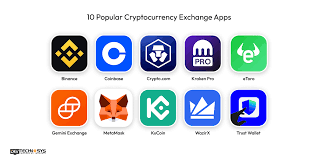
For beginners, user-friendly apps with simple interfaces and educational resources are ideal. Advanced users may prefer apps with futures trading, margin trading, and detailed chart analysis. Security is another key factor when selecting a crypto app, so platforms with two-factor authentication, cold storage, and strong encryption are highly recommended.
Best Crypto Apps 2026. Crypto apps are available for Android, iPhone, Windows, and Mac devices, making it easy to trade anytime and anywhere. Before choosing an app, compare fees, supported cryptocurrencies, withdrawal options, and customer support quality.
As the crypto market continues to grow in 2026, using a reliable crypto app can make investing safer, faster, and more convenient for both beginners and professional traders.
Whether you’re just getting into crypto or you’ve been trading for a few years, the app you use matters more than most people realize. A good crypto app makes it easy to buy, sell, and track your holdings. A bad one can cost you money in fees, leave you locked out at the wrong moment, or expose you to security risks.
This guide covers the best crypto apps in 2026 — what each one is good for, who it suits, and what the drawbacks are. No fluff, just practical information to help you pick the right one.
What Makes a Good Crypto App?
Before jumping into the list, here’s what separates a solid crypto app from a mediocre one:
Security. Does the app use two-factor authentication? Is a large portion of funds stored in cold storage? Has the platform been audited?
Fees. Some apps look free but quietly charge high spreads. Others charge a flat trading fee. It adds up quickly if you trade often.
Coin selection. If you only want Bitcoin and Ethereum, most apps work fine. But if you want access to smaller altcoins, your options narrow.
Ease of use. Beginners need a clean, simple interface. Advanced traders need charts, order types, and more control.
Jurisdiction support. Not every app is available in every country. Always check whether the app is licensed and available where you live.
With those criteria in mind, here are the best crypto apps to use in 2026.
Best Crypto Apps 2026:-
1. Coinbase — Best for Beginners
Coinbase is probably the most recognized name in crypto, and for good reason. It’s designed to be simple, trustworthy, and beginner-friendly. If you’ve never bought crypto before, Coinbase is likely the easiest place to start.

The app lets you buy Bitcoin, Ethereum, and hundreds of other coins with a bank transfer, debit card, or PayPal. The interface is clean — you tap the coin you want, enter an amount, confirm, and you’re done. No complex order books or jargon to navigate.
What’s good about it:
- Very easy to use, even for first-timers
- Available in over 100 countries
- Strong regulatory compliance and licensing
- FDIC-insured cash balances (US users)
- Coinbase One subscription removes trading fees for a flat monthly rate
What to watch out for:
- Standard fees can be high (around 1.5%–2.5% per transaction on the basic app)
- Customer support can be slow during high-traffic periods
- Limited tools for advanced traders on the main app
Practical example: If you want to buy $100 worth of Bitcoin for the first time and don’t want to deal with any complexity, Coinbase handles it in under two minutes.
Best for: First-time buyers, casual investors, people who prioritize simplicity and brand trust.
2. Binance — Best for Variety and Low Fees
Binance is the largest crypto exchange in the world by trading volume, and its app reflects that scale. You get access to hundreds of trading pairs, some of the lowest fees in the industry, and a wide range of features, including spot trading, futures, staking, and more.
The trading fee starts at 0.1% per trade, which drops further if you hold BNB (Binance’s native token) or hit higher volume tiers.

What’s good about it:
- Huge coin selection — over 350 cryptocurrencies
- Among the lowest trading fees available
- Strong liquidity, so orders fill quickly
- Built-in staking and savings products
- Available on Android and iOS with a full-featured app
What to watch out for:
- The interface can feel overwhelming for new users
- Binance has faced regulatory scrutiny in several countries — availability varies
- Customer support quality is inconsistent
Practical example: You want to trade between five different altcoins in a single afternoon. Binance gives you the tools, the trading pairs, and the liquidity to do that efficiently.
Best for: Active traders, people who want low fees, and users who need access to a wide range of coins.
3. Kraken — Best for Security-Focused Users
Kraken has been around since 2011 and has built a reputation as one of the most secure and transparent exchanges operating today. It has never been hacked — a rare distinction in the crypto world — and it undergoes regular third-party audits.
The app offers both a simple “Instant Buy” option for beginners and a more advanced interface for traders who want more control. Kraken Pro is built into the same app and gives you access to professional charting tools and advanced order types.

What’s good about it:
- Never suffered a major security breach
- Strong regulatory compliance across the US, UK, and EU
- Competitive fees on Kraken Pro (as low as 0.16% per trade)
- Offers both basic and advanced interfaces in one app
- Supports staking for several coins
What to watch out for:
- The basic “Instant Buy” has higher fees than Pro mode
- Some users find the app’s design less polished than Coinbase’s
- Fewer altcoins than Binance
Practical example: You’re storing a significant amount of crypto, and you want peace of mind that the exchange you’re using has a clean security record. Kraken gives you that confidence.
Best for: Security-conscious users, intermediate to advanced traders, people in the US or EU who want a well-regulated platform.
4. Crypto.com — Best All-in-One App
Crypto.com has evolved into one of the most feature-rich crypto apps available. Beyond buying and selling, the app includes a prepaid Visa card (that gives crypto cashback), DeFi wallet access, NFT features, staking, and a crypto earn program.
If you want one app that handles most of your crypto needs — spending, saving, trading, and earning — Crypto.com is worth a look.
What’s good about it:
- Crypto Visa card with up to 5% cashback in CRO (the platform’s token)
- Over 250 coins available
- Earn interest on crypto holdings through fixed-term deposits
- Clean, well-designed mobile app
- Available in most major markets
What to watch out for:
- To get the best card perks, you need to stake a significant amount of CRO tokens
- Some earnings have dropped significantly compared to earlier years
- CRO token price fluctuations affect cashback value
Practical example: You want to use crypto in everyday life — paying for groceries, earning cashback, and growing your holdings with staking — all from one place. Crypto.com covers all of that.
Best for: Users who want an all-in-one crypto lifestyle app, people interested in the Crypto.com Visa card.
5. Gemini — Best for US Users Who Want Regulation and Simplicity
Gemini was founded in New York and operates under some of the strictest regulatory frameworks in the US. It’s licensed as a trust company, which means customer funds are held with an extra layer of legal protection.
The app is clean and easy to use, and Gemini has recently improved its fee structure with ActiveTrader mode, offering significantly lower fees than its standard interface.
What’s good about it:
- Licensed trust company — strong regulatory standing in the US
- SOC 2 certified security
- Gemini Earn lets you earn yield on select coins (where available)
- Clean mobile app design
- Supports recurring buys for dollar-cost averaging
What to watch out for:
- Standard interface fees are higher than those of competitors
- Less coin variety compared to Binance or Crypto.com
- Primarily US-focused; international availability is more limited
Practical example: You’re in the US, and you want a crypto app that you’re confident is operating within the law and keeping your funds safe. Gemini checks that box with minimal compromise on usability.
Best for: US-based users who prioritize regulatory compliance and security.
6. OKX — Best for Advanced Traders
OKX has grown into one of the most capable trading platforms in the world. The app supports spot trading, margin trading, futures, options, and copy trading — where you can mirror the trades of experienced traders automatically.
Fee-wise, OKX is competitive, and the app’s interface is well-organized given how many features it offers.
What’s good about it:
- An extensive range of trading tools and order types
- Copy trading feature for those who want to follow experienced traders
- Strong liquidity across major and mid-cap coins
- OKX Web3 wallet built into the app for DeFi access
- Available in most countries outside the US
What to watch out for:
- Not available in the United States
- Overwhelming for beginners — the feature set is large
- Requires some learning before you can use it effectively
Practical example: You want to set up a futures trade with a stop-loss and take-profit, while also copy trading a top performer for your altcoin portfolio. OKX handles all of this in one app.
Best for: Advanced and active traders, people outside the US who want deep trading functionality.
7. Trust Wallet — Best for Self-Custody
Trust Wallet is different from the exchanges above. It’s not a trading platform — it’s a self-custody wallet, meaning you hold your own private keys and your crypto is stored on your device, not on a company’s servers.
This is important if you want full ownership of your assets. With an exchange, the exchange holds your crypto. With Trust Wallet, only you do.
The app supports thousands of tokens across dozens of blockchains and includes a built-in browser for accessing DeFi apps and NFT marketplaces.
What’s good about it:
- Full self-custody — you control your keys
- Supports thousands of tokens and multiple blockchains
- Free to use — no trading fees (network fees apply)
- Built-in DeFi browser and swap functionality
- Available on iOS and Android
What to watch out for:
- If you lose your recovery phrase, your crypto is gone — no support can help you
- No fiat on-ramp by default — you need to transfer crypto in from another app
- Not ideal as a primary trading platform
Practical example: You’ve bought crypto on Coinbase, and now you want to move it off the exchange into a wallet you fully control. Trust Wallet is one of the most user-friendly options for this.
Best for: Users who want self-custody, DeFi users, people who hold a range of tokens across different blockchains.
Quick Comparison Table
| App | Best For | Trading Fees | Coin Count | Self-Custody |
|---|---|---|---|---|
| Coinbase | Beginners | 1.5–2.5% | 200+ | No |
| Binance | Low fees, variety | From 0.1% | 350+ | No |
| Kraken | Security | From 0.16% | 200+ | No |
| Crypto.com | All-in-one features | Varies | 250+ | Optional |
| Gemini | US regulation | Varies | 70+ | No |
| OKX | Advanced trading | From 0.08% | 300+ | Optional |
| Trust Wallet | Self-custody | None (DEX) | 4.5M+ tokens | Yes |
Pros and Cons of Using Crypto Apps
Pros
Convenience. Buy, sell, and track your portfolio from anywhere, anytime. Most apps take under two minutes to execute a trade.
Access to a wide range of assets. Even conservative apps like Coinbase offer 200+ coins. Binance and OKX go much further.
Built-in security features. Biometric login, two-factor authentication, and withdrawal whitelisting are standard on most reputable apps.
Additional earning options. Staking, savings products, and cashback cards let you do more with your crypto than just hold it.
Recurring purchase options. Most apps let you set up automatic buys on a weekly or monthly schedule — useful for dollar-cost averaging.
Cons
Exchange risk. Keeping crypto on an exchange means trusting that exchange. If the platform is hacked or goes bankrupt (it has happened), your funds may be at risk.
Fee complexity. Different fee tiers, spreads, and withdrawal charges can make it hard to know exactly what you’re paying.
Regulatory uncertainty. In some countries, regulations around crypto change quickly. An app available today might have restrictions tomorrow.
Scam risk. Fake crypto apps circulate in app stores and via social media links. Always download from official sources and check developer credentials.
Tax complexity. Trading crypto creates taxable events in many countries. Apps generally don’t do your taxes for you — you’ll need separate tracking software for that.
Tips for Choosing the Right Crypto App
Start with your goal. Are you buying and holding long-term? Then simplicity and security matter more than trading features. Are you actively trading? Then you need low fees and advanced order types.
Check if it’s available in your country. Binance, OKX, and others have varying availability depending on local regulations. Verify before signing up.
Don’t keep everything on one exchange. Spreading holdings between an exchange and a self-custody wallet reduces your risk exposure.
Enable all security features. Use a strong password, turn on two-factor authentication, and never share your recovery phrase with anyone.
Watch the fees on small trades. A 2% fee on a $50 trade is $1. On a $50,000 trade, that’s $1,000. Fee structure matters much more as your amounts grow.
Frequently Asked Questions
Which crypto app is safest in 2026?
Kraken and Gemini are consistently ranked among the safest for exchange-based storage, with strong security histories and regulatory compliance. For full safety, a self-custody wallet like Trust Wallet or a hardware wallet gives you the most control.
Can I use multiple crypto apps at the same time?
Yes, and many experienced users do. A common setup is using one exchange for trading (like Binance or Kraken) and a separate wallet (like Trust Wallet) for long-term storage.
Which crypto app has the lowest fees?
OKX and Binance have some of the lowest spot trading fees, starting at 0.08%–0.1%. Using a platform’s native token often reduces fees further.
Is Coinbase good for beginners in 2026?
Yes. It remains one of the simplest and most beginner-friendly apps available, though the standard fees are higher than some alternatives. Coinbase One can offset this for frequent buyers.
Do I need to verify my identity to use a crypto app?
Most reputable apps require KYC (Know Your Customer) verification before you can deposit fiat money or withdraw above certain limits. This is standard compliance practice. Wallets like Trust Wallet don’t require KYC since they don’t handle fiat.
What’s the difference between a crypto exchange and a crypto wallet?
An exchange (like Coinbase or Binance) lets you buy and sell crypto, but the exchange holds your funds. A wallet (like Trust Wallet) is where you store crypto yourself — you hold the private keys. Many exchanges offer built-in wallets, but they’re custodial, meaning the exchange still controls the keys.
Are crypto apps available on iPhone and Android?
Yes. All the apps in this list are available on both iOS and Android. Always download from the official App Store or Google Play, and double-check the developer name to avoid fake apps.
What happens if a crypto app shuts down?
If you hold crypto on a centralized exchange and it shuts down, there’s a risk of losing funds depending on the circumstances (as seen with exchanges like FTX). This is why many users prefer to move crypto to a self-custody wallet for long-term storage.
Conclsion
There’s no single best crypto app for everyone. The right choice depends on where you live, what you want to do, and how experienced you are.
If you’re just starting, Coinbase is the easiest entry point. If low fees and variety matter, Binance is hard to beat. For security and peace of mind, Kraken is a solid choice. And if you want full control over your own funds, Trust Wallet is worth setting up alongside any exchange you use.
Whatever app you choose, take security seriously from day one. Enable two-factor authentication, use a unique password, and don’t leave large amounts sitting on any exchange longer than necessary. The crypto space has matured a lot, but it still rewards careful users.

