
Crypto investing in India has come a long way. From the chaos of the 2022 bear market to the regulatory clarity slowly emerging in 2025–2026, more Indians are now looking at digital assets as a serious part of their portfolio — not just a gamble.
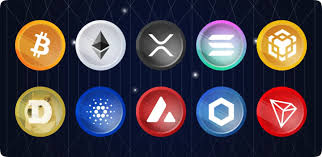
But with thousands of coins listed on exchanges, figuring out which ones are actually worth your money is the hard part.
Best Crypto 2026 to Invest in India. This guide breaks down the best crypto to invest in India in 2026 — coins with real utility, decent track records, and a reasonable case for growth. No hype, no promises. Just a practical look at what’s worth considering.
Quick Overview: Best Crypto to Invest in India in 2026
| Crypto | Best For | Risk Level |
|---|---|---|
| Bitcoin (BTC) | Long-term store of value | Medium |
| Ethereum (ETH) | DeFi, smart contracts | Medium |
| Solana (SOL) | Fast transactions, dApps | Medium-High |
| XRP (Ripple) | Cross-border payments | Medium |
| Polygon (MATIC) | India-friendly Layer 2 | Medium-High |
| Chainlink (LINK) | Data oracles, Web3 | High |
| Avalanche (AVAX) | Enterprise blockchain | High |
Why Indians Are Looking at Crypto Again in 2026
After the 30% TDS and 1% flat tax on crypto gains introduced in 2022, trading volumes dropped sharply on Indian exchanges. Many investors moved to international platforms or took a wait-and-watch approach.
But things have shifted. Bitcoin crossed major milestones in 2024–2025. Institutional money entered the space. India’s regulatory tone, while still cautious, became more defined, which actually brought some investors back. They’d rather deal with a clear (if steep) tax structure than uncertainty.
If you’re investing from India in 2026, you’re doing so in a more mature environment than in 2021. That’s both a blessing and a reason to be more selective.
Best Crypto 2026 to Invest in India:-
1. Bitcoin (BTC) — The Anchor Investment
If you’re new to crypto or want the most stable option in an unstable asset class, Bitcoin is the default starting point.
Bitcoin has a fixed supply of 21 million coins. No government can print more of it. That makes it function a bit like digital gold, which is why people hold it as a hedge against inflation and currency depreciation.

In India, where the rupee has historically weakened against the dollar, Bitcoin has appealed to investors who want exposure to a dollar-denominated asset without a traditional brokerage account.
Bitcoin is often called the “digital gold” of the crypto world and is considered the anchor investment for many long-term investors. It was created in 2009 by the mysterious developer known as Satoshi Nakamoto. As the first cryptocurrency ever launched, Bitcoin introduced the idea of decentralized money that works without banks or governments controlling it.
One of the biggest reasons Bitcoin is viewed as an anchor investment is its strong reputation and market dominance. Compared to newer cryptocurrencies, Bitcoin has the largest user base, the highest adoption rate, and the strongest security network. Major companies, institutional investors, and even some governments now hold Bitcoin as part of their financial strategy. This level of trust gives it more stability than many smaller crypto coins.
Bitcoin also has a limited supply of only 21 million coins, making it scarce like gold. Many investors believe this scarcity can help protect value over time, especially during inflation or economic uncertainty. Because of this, Bitcoin is often the first cryptocurrency people buy when entering the crypto market.
Another reason Bitcoin is called an anchor investment is that it usually influences the entire crypto market. When Bitcoin rises, many other cryptocurrencies often follow. When it falls, the broader market can also decline. This makes Bitcoin the foundation of many crypto portfolios.
Although Bitcoin can still be volatile, many long-term investors see it as the safest and most established cryptocurrency available today.
Practical example: An investor in Pune who put ₹50,000 into BTC in early 2023 and held through the 2024 bull run saw significant appreciation — not because they traded, but because they simply waited.
Pros:
- Highest liquidity — easy to buy and sell on any Indian exchange
- Most widely accepted and regulated crypto globally
- Strong institutional backing (ETFs, corporate treasuries)
- Proven 10+ year track record
Cons:
- Expensive per coin (though you can buy fractions)
- Slower transaction speeds compared to newer blockchains
- Gains are taxed heavily in India (30% flat tax)
- Already matured — explosive 100x returns are unlikely
Best for: First-time crypto buyers, long-term holders, and anyone wanting lower volatility within crypto.
2. Ethereum (ETH) — The Utility Powerhouse
Bitcoin is digital gold. Ethereum is more like a digital infrastructure.
Ethereum is the platform that powers most of the decentralized finance (DeFi) ecosystem — lending protocols, NFT marketplaces, DAOs, and thousands of apps. When developers build blockchain applications, Ethereum is still the first choice for most of them.

The move to Proof of Stake (Ethereum 2.0) also made it more energy-efficient, addressing one of the major criticisms from regulators and environmentally conscious investors.
Ethereum is widely known as the “utility powerhouse” of the crypto industry because it does much more than simply transfer digital money. Launched in 2015 by Vitalik Buterin and other developers, Ethereum introduced smart contracts — self-executing programs that run on the blockchain without needing middlemen. This innovation transformed blockchain technology from a payment system into a platform for building decentralized applications.
Ethereum powers thousands of projects across industries such as decentralized finance (DeFi), NFTs, blockchain gaming, and Web3 applications. Many popular crypto platforms and tokens are built on the Ethereum network, making it one of the most important ecosystems in the digital asset world. Developers prefer Ethereum because of its large community, advanced tools, and strong network security.
One major reason Ethereum is considered a utility powerhouse is its real-world use cases. People use Ethereum for lending, trading, digital collectibles, online payments, and even decentralized social media platforms. Its native currency, ETH, is used to pay transaction fees and support operations on the network.
Ethereum also moved from the energy-intensive Proof-of-Work system to the more efficient Proof-of-Stake model, helping reduce energy consumption and improve scalability. This upgrade made the network faster and more environmentally friendly.
While Ethereum faces competition from newer blockchains, it remains one of the most trusted and widely used crypto networks globally. Many investors see ETH as a long-term asset because of its strong technology, growing adoption, and central role in the future of decentralized internet services.
Practical example: A developer in Bengaluru building a blockchain-based supply chain tool for an FMCG company is likely building on Ethereum or an Ethereum-compatible chain. That usage creates demand for ETH — and demand drives price.
Pros:
- Most widely used smart contract platform
- Large and active developer community
- Used in DeFi, NFTs, and enterprise solutions
- More utility than BTC — price tied to actual usage
Cons:
- Gas fees can spike during network congestion
- Strong competition from Solana, Avalanche, and others
- Complex for beginners to understand fully
- Regulatory treatment of staking rewards is still unclear in India
Best for: Investors who want to back the backbone of Web3, not just a currency.
3. Solana (SOL) — Speed and Scale
Solana became one of the biggest stories in crypto over the past two years. After nearly collapsing due to its association with FTX in 2022, it made a dramatic comeback — and for good reason.

Solana processes thousands of transactions per second at a fraction of Ethereum’s cost. It’s the platform behind some of the most active NFT markets, gaming projects, and consumer crypto apps. The Solana ecosystem has attracted serious developer attention, and that trend has continued into 2026.
Practical example: Mobile-first crypto apps — think wallets, games, small payment tools — often run on Solana because fees are negligible. For India, where mobile internet adoption is massive, this matters.
Pros:
- Very fast and cheap transactions
- Growing ecosystem of apps and DeFi protocols
- Strong community and developer activity
- Good availability on Indian exchanges like CoinDCX and WazirX
Cons:
- History of network outages (reliability concerns remain)
- More volatile than BTC or ETH
- Relatively centralized compared to Ethereum
- Shorter track record
Best for: Investors comfortable with higher risk in exchange for higher potential upside.
4. XRP (Ripple) — Cross-Border Payments Play
XRP has had a turbulent few years, mostly due to its lengthy legal battle with the US SEC. With that mostly resolved, XRP has regained institutional interest — particularly in the payments space.
India is one of the world’s largest recipients of international remittances. Millions of NRIs send money back home every year. If cross-border payment solutions built on XRP see wider adoption by banks and fintech companies, that’s a direct use case relevant to India.
Practical example: A fintech startup handling remittances from the Gulf to Kerala could potentially use RippleNet to settle transactions faster and cheaper than SWIFT. XRP sits at the centre of that infrastructure.
Pros:
- Specific, real-world use case (payments and settlements)
- Faster and cheaper than traditional international transfers
- Legal uncertainty was largely cleared up
- Already integrated with some banks and payment providers
Cons:
- Heavily dependent on institutional adoption — not a grassroots coin
- Centralized compared to Bitcoin or Ethereum
- Limited upside if the payment use case doesn’t expand as expected
- Not as widely available on all Indian platforms
Best for: Investors who believe in crypto’s role in solving real financial infrastructure problems.
5. Polygon (MATIC) — India’s Own Blockchain Darling
Polygon was founded by Indian developers — Jaynti Kanani, Sandeep Nailwal, and Anurag Arjun — and has grown into one of the most important Layer 2 solutions for Ethereum.
What Polygon does is simple: it makes Ethereum faster and cheaper by processing transactions off the main chain and settling them in batches. This means dApps can run on Ethereum’s security without the high fees.
The Indian connection matters beyond pride. Polygon has local developer communities, partnerships with Indian enterprises, and a team that understands the Indian market.
Practical example: Several Indian startups building NFT-based loyalty programmes or tokenized real estate projects have chosen Polygon as their underlying infrastructure — specifically because of low fees and Ethereum compatibility.
Pros:
- Ethereum-compatible — benefits from Ethereum’s ecosystem
- Very low transaction costs
- Indian-origin team with local credibility
- Backed by major partners (Meta, Starbucks, Reddit have used it)
Cons:
- Layer 2 solutions face competition (Arbitrum, Optimism)
- MATIC token utility depends on Ethereum’s continued dominance
- Has gone through significant rebranding (now called POL), which caused some confusion
- Medium-to-high volatility
Best for: Investors who want Ethereum exposure at a lower entry price, with an Indian angle.
6. Chainlink (LINK) — The Infrastructure Bet
Chainlink is less glamorous than Bitcoin or Solana, but it serves a critical function in the blockchain world: it connects smart contracts to real-world data.
Think about a crop insurance policy built on blockchain. For it to pay out automatically when rainfall drops below a threshold, it needs reliable external data. Chainlink is the service that feeds that data into the contract securely. This is called an Oracle network.
As more industries — finance, insurance, supply chain, healthcare — explore blockchain applications, the demand for reliable data bridges like Chainlink grows.
Pros:
- Critical infrastructure for DeFi and enterprise blockchain
- Strong partnerships with financial institutions
- Not as speculative — tied to actual network demand
- Works across multiple blockchains
Cons:
- Not easy to explain to non-technical investors
- Growth is tied to overall blockchain adoption (longer time horizon)
- Less exciting short-term price action
- Requires an understanding of DeFi to fully appreciate
Best for: Patient investors with a longer horizon who want exposure to blockchain infrastructure rather than coins.
7. Avalanche (AVAX) — Enterprise Blockchain
Avalanche has positioned itself as the go-to blockchain for institutions and governments looking to build their own customized chains (called subnets). It’s faster than Ethereum, supports Solidity (Ethereum’s programming language), and has attracted enterprise partnerships.
For India specifically, Avalanche’s subnet model is interesting — a government agency or large bank could theoretically launch its own chain on Avalanche while still being connected to the broader ecosystem.
Pros:
- High throughput and low latency
- Enterprise and government-friendly architecture
- Compatible with Ethereum tools and developers
- Growing DeFi ecosystem
Cons:
- Faces stiff competition from Ethereum, Solana, and others
- Token demand tied to subnet adoption — still early
- More technical — harder for retail investors to evaluate
- Volatile price history
Best for: Investors tracking enterprise blockchain adoption and willing to wait 2–3 years.
How to Buy Crypto in India in 2026
The process is straightforward if you use a registered Indian exchange:
- Choose a SEBI/FIU-registered exchange — CoinDCX, WazirX, Mudrex, or CoinSwitch are the main options.
- Complete KYC — Aadhaar and PAN verification is mandatory.
- Deposit INR — via UPI, IMPS, or bank transfer.
- Buy your chosen crypto — start with small amounts.
- Store safely — for large amounts, consider a hardware wallet like Ledger.
Tax Rules for Crypto in India (2026)
This is important. India taxes crypto gains at a flat 30% — no deductions, no loss offsetting against other income. There’s also a 1% TDS on every sale transaction above a threshold.
Keep records of every transaction. Use a crypto tax tool or consult a CA familiar with digital assets before filing.
Pros and Cons of Investing in Crypto in India
Pros:
- High return potential compared to traditional assets
- 24/7 market — no waiting for exchange hours
- Diversification beyond stocks, gold, and real estate
- Growing regulatory clarity reduces some uncertainty
Cons:
- 30% flat tax makes short-term trading very expensive
- High volatility — prices can drop 50–80% in bear markets
- The regulatory environment can change quickly
- Scams and rug pulls are still common in smaller coins
FAQs
Is crypto legal in India in 2026?
Yes. Crypto is legal to buy, sell, and hold in India. It is not legal tender, but it is treated as a virtual digital asset (VDA) and taxed accordingly. Exchanges must be registered with the Financial Intelligence Unit (FIU).
Which crypto is best for beginners in India?
Bitcoin or Ethereum are the safest starting points. They are the most liquid, most studied, and available on all major Indian platforms. Start with a small amount — even ₹500 — to understand how it works before committing more.
Can I invest ₹1,000 in crypto in India?
Yes. Most Indian exchanges allow investments starting from ₹100. You can buy fractional units of Bitcoin, Ethereum, and most other coins.
Should I hold crypto long-term or trade actively?
Given India’s 30% flat tax, active trading is expensive. Every sell is a taxable event. Most financial advisors suggest a buy-and-hold approach for at least 1–2 years to justify the tax burden.
What percentage of my portfolio should be in crypto?
There’s no universal answer, but most conservative financial advisors suggest keeping crypto exposure to 5–10% of your total investable assets. It is a high-risk asset class — don’t put money in that you can’t afford to lose.
Is Polygon (MATIC/POL) a good investment because it’s Indian?
The Indian origin is a bonus in terms of local community and developer support, but invest based on fundamentals — use case, adoption, competition — not just geography. That said, Polygon’s fundamentals are solid.
Which Indian exchange is best for buying these coins?
CoinDCX and CoinSwitch are generally considered the most reliable for Indian users in 2026, with good INR support and a reasonable selection of coins. Always verify registration with the FIU before depositing funds.
Conclsion
Crypto investing in India in 2026 isn’t about finding the next moonshot token. It’s about understanding what you’re buying, why it might grow, and how it fits into your broader financial plan.
Bitcoin and Ethereum remain the most sensible anchors. Solana, Polygon, and XRP offer higher upside with higher risk. Chainlink and Avalanche are longer-term infrastructure bets.
Start small. Understand the tax implications. Use registered exchanges. And resist the pressure to chase coins that are already up 500% — those moves are usually already over by the time they reach your WhatsApp group.
The investors who do well in crypto aren’t the ones who got lucky. They’re the ones who stayed patient, diversified within crypto, and didn’t panic sell every time the market dropped.

