
Picture this: you land in a new country for work, open your phone to check your messages, and half your apps don’t load. Your favourite news sites are blocked. Social media is gone. Even some Google services aren’t working properly. Welcome to internet censorship — a reality for billions of people around the world.
VPNs have become the most common way people deal with this. But how they work, whether they’re legal, and which ones actually hold up in heavily censored environments — that’s where things get complicated.
This guide covers all of it in plain language.
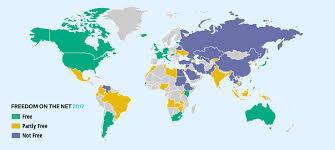
VPN Usage in Countries with Censorship Some countries around the world are known for strict internet censorship and heavy control over online content. Governments in these countries often restrict access to websites, social media platforms, news sources, streaming services, and communication apps. The main reasons usually include political control, national security, cultural regulations, or limiting criticism of the government.
China is one of the most well-known examples because of its “Great Firewall,” which blocks platforms like Google, YouTube, Facebook, Instagram, and many international news websites. The country promotes local alternatives while closely monitoring internet activity.
North Korea has one of the strictest internet systems in the world. Most citizens cannot access the global internet and instead use a heavily controlled internal network managed by the government.
Iran also imposes strong online restrictions, especially during political protests or periods of unrest. Popular social media apps and messaging platforms are frequently limited or blocked.
In Russia, online censorship has increased in recent years, with restrictions placed on independent media, social platforms, and foreign websites.
Other countries often associated with internet censorship include Saudi Arabia, Turkey, and the United Arab Emirates, where certain websites, VoIP services, or political content may be restricted.
Because of these limitations, many users rely on VPN services and encrypted communication tools to access a more open internet and protect online privacy.
What Internet Censorship Actually Looks Like
Censorship isn’t always a blunt instrument. It comes in different forms depending on the country, and understanding what you’re dealing with helps you choose the right tool.
Website blocking is the most common type. Governments instruct ISPs to block access to specific domains — news outlets, social media platforms, foreign streaming services, or any site deemed politically sensitive.
Bandwidth throttling is subtler. Your connection technically works, but certain services load so slowly that they become unusable. Some countries use this to discourage VPN use without outright banning it.
Deep Packet Inspection (DPI) is the more sophisticated version. Instead of just blocking URLs, governments use technology that examines the actual data packets traveling through their networks. This is how some countries detect and block VPN traffic specifically.
App store restrictions mean that certain apps — including many VPNs — are simply removed from local app stores, making them harder to install in the first place.
The countries with the most aggressive censorship systems in 2026 include China, Russia, Iran, North Korea, Turkmenistan, Belarus, and Cuba — though dozens of others impose significant restrictions on specific topics or platforms.
How VPNs Help in Censored Environments
A VPN — Virtual Private Network — works by routing your internet traffic through a server in another country. To your ISP and to the government’s monitoring systems, it looks like you’re connecting to a single server, not browsing the open internet.
Here’s a simple breakdown of what happens:
- You connect to a VPN server in, say, Germany
- Your device encrypts all outgoing traffic before it leaves your phone or laptop
- The encrypted traffic reaches the VPN server in Germany
- From there, it accesses the website or service you requested
- The response comes back through the same encrypted tunnel
To anyone watching your connection — your ISP, your government, a network administrator — all they see is encrypted data going to a server in Germany. They can’t see what sites you’re visiting or what you’re doing.
This is why VPNs are so valuable in countries with censorship. They’re not perfect, but for most users in most situations, they work.
VPN Usage in Countries with Censorship like China, Iran & Russia: Countries Where VPN Usage Is Most Common
China — The Great Firewall
China has the most sophisticated internet censorship system in the world, commonly called the Great Firewall. It blocks Google, YouTube, Facebook, Instagram, WhatsApp, Twitter/X, most international news sites, and thousands of other services.
VPN usage in China is widespread despite being technically restricted for individuals. Millions of people — students, expats, business professionals, and researchers — use VPNs daily to access the global internet.

The challenge is that China’s DPI technology is advanced enough to detect and block many standard VPN protocols. VPNs that work in China typically need obfuscation technology — a feature that disguises VPN traffic to look like regular HTTPS web browsing.
Practical example: A foreign teacher working at a university in Shanghai needs to access Google Classroom and YouTube to prepare lessons. Without a VPN, neither works. With a good obfuscated VPN like ExpressVPN or Astrill, they can access both reliably, though speeds vary.
What works: VPNs with obfuscation (stealth protocols), dedicated servers for China. Popular choices include ExpressVPN, Astrill, and NordVPN (with obfuscated servers enabled).
What doesn’t: Free VPNs are almost universally blocked. Standard OpenVPN connections get detected quickly.
Russia — Rapidly Tightening Restrictions
Russia has significantly expanded its censorship infrastructure since 2022. Instagram, Facebook, and thousands of websites are blocked. The government has also passed laws requiring VPN providers to register with authorities and comply with blocking orders — meaning many commercial VPNs have voluntarily withdrawn their Russian servers rather than comply.

Despite this, VPN usage in Russia skyrocketed after 2022. Many Russians use VPNs to access news sources, social media, and communication tools that are banned domestically.
Practical example: A Russian journalist needs to access international news sources and use Twitter to share reporting. A VPN connecting through a server in Finland or Estonia — neighbouring countries with fast connections — gives them reliable access with low latency.
What works: VPNs that haven’t pulled their servers due to Russian regulations, or those using obfuscation. Outline (by Jigsaw/Google) and Lantern are also popular for bypassing Russian blocks.
What doesn’t: VPNs that comply with Russian government demands to register — these are compromised by design.
Iran — Pervasive Filtering
Iran blocks social media, many news websites, and a large portion of the global internet. WhatsApp has been restricted at various points, and during periods of civil unrest, the government has implemented internet shutdowns — cutting off entire regions.

VPNs are illegal in Iran for most civilians, but enforcement is inconsistent. Usage is extremely common, particularly among younger Iranians and professionals.
Practical example: A university student in Tehran needs access to academic journals and research databases that are hosted on blocked international servers. A VPN lets them access JSTOR, Google Scholar, and other educational resources that would otherwise be unavailable.
What works: VPNs with stealth/obfuscation features. Psiphon and Lantern are specifically designed for high-censorship environments and are popular in Iran. During shutdowns, satellite-based internet (like Starlink, when accessible) becomes critical.
Belarus — Political Censorship
Belarus has used internet shutdowns and website blocking as tools of political control, particularly during election periods and protests. Independent news sites, opposition platforms, and certain social media are periodically blocked.
What works: VPNs with obfuscation. Tor browser combined with a VPN (VPN over Tor) provides additional protection for users in politically sensitive situations.
Cuba — Severely Limited Access
Cuba has one of the lowest internet penetration rates in the world, and what internet exists is heavily filtered. Access is expensive, slow, and monitored. Social media platforms are blocked during periods of unrest.
Many Cubans rely on “el paquete semanal” — a weekly offline package of downloaded content distributed person-to-person — but for those with internet access, VPNs are the primary tool for reaching the open web.
Turkmenistan and North Korea — Near-Total Isolation
These two represent the exd. Turkmenistan has essentially no public internet access worth mentioning, and what exists is heavily monitored. North Korea operates a completely separate internal network (called Kwangmyong) with almost no connection to the global internet for ordinary citizens.
In these environments, conventional VPNs are not a realistic solution for most residents. They’re primarily used by foreign diplomats, journalists, and aid workers who have different levels of network access.
What Makes a VPN Work in High-Censorship Countries
Not all VPNs are built the same. Here’s what separates the ones that actually work from the ones that get blocked immediately:
Obfuscation / Stealth Protocols: This is the most important feature for censored countries. Obfuscation disguises VPN traffic so it looks like normal web traffic. Without it, DPI systems flag and block the connection. Look for VPNs that mention “stealth mode,” “obfuscated servers,” or specific protocols like Shadowsocks or V2Ray.
No-Logs Policy In countries where VPN use carries legal risk, you want a provider that genuinely doesn’t keep records of your activity. Providers audited by independent security firms are more trustworthy than those that just make the claim.
Kill Switch: If your VPN connection drops — which happens — a kill switch cuts your internet entirely rather than exposing your real IP and traffic to your ISP. In censored environments, an unexpected exposure can have serious consequences.
Multiple Protocols The ability to switch between OpenVPN, WireGuard, IKEv2, and proprietary protocols means that if one gets blocked, you can switch to another. VPNs locked to a single protocol are more vulnerable.
RAM-Only Servers Some premium VPNs run their servers entirely on RAM, meaning no data is written to disk. If a server is ever seized by authorities, there’s nothing to recover.
Pros and Cons of Using a VPN in Censored Countries
Pros
Access to the open internet — The most obvious benefit. A working VPN restores access to blocked websites, apps, and services that are unavailable domestically.
Protection from surveillance — Encrypted traffic is far harder for state surveillance systems to monitor. This is critical for journalists, activists, lawyers, and anyone who might be targeted.
Secure communication — VPNs protect messaging and email from interception, particularly important when using local or public networks.
Access to international business tools — Many professionals in censored countries need access to global platforms like Google Workspace, Slack, Zoom, or GitHub to do their jobs. VPNs make this possible.
Bypass throttling — ISPs sometimes slow down specific services. A VPN can hide what service you’re using, preventing targeted throttling.
Cons
Speed reduction — Routing traffic through a server in another country adds latency. In countries where the censorship infrastructure actively fights VPN traffic, speeds can drop significantly.
Legal risk — In countries like China, Iran, and Russia, using an unauthorised VPN is technically illegal for civilians. Enforcement varies — most ordinary users aren’t prosecuted — but the risk is real, particularly for those already under scrutiny.
Reliability issues — During political crises or heightened censorship periods, even strong VPNs get blocked. No VPN has a 100% uptime guarantee in environments actively working to shut them down.
Cost — The VPNs that actually work in high-censorship countries (Astrill, ExpressVPN) are not cheap. Free VPNs almost universally fail in these environments.
Trust in your VPN provider — In censored countries, you’re moving your privacy risk from your government to your VPN provider. If the VPN provider logs data or complies with government requests, your protection disappears.
Practical Tips for Using VPNs in Censored Countries
Download before you arrive. If you’re travelling to China, Iran, or Russia, download and set up your VPN before you land. Once you’re inside the country, accessing VPN websites is often blocked.
Have a backup. Keep two or three VPN apps installed. If one gets blocked — which happens — you need a fallback immediately.
Use obfuscation by default. Don’t rely on standard VPN connections in high-censorship environments. Enable stealth mode or obfuscated servers from day one.
Keep the app updated. VPN providers constantly update their apps to stay ahead of blocking efforts. An outdated app may not have the latest protocol improvements.
Use a kill switch. Enable it in the app settings and leave it on. The few seconds of inconvenience when your VPN reconnects are nothing compared to the risk of an exposed connection.
Don’t use free VPNs in high-censorship countries. They don’t work, and the sketchy ones may actively compromise your privacy.
Consider Tor for sensitive activities. For users facing serious political risk — journalists, activists — combining a VPN with Tor adds a layer of anonymity that’s much harder to defeat.
VPN Legality: A Quick Country-by-Country Summary
| Country | VPN Legal Status | Enforcement |
|---|---|---|
| China | Restricted (only govt-approved VPNs) | Moderate — mostly targets providers |
| Russia | Regulated (must comply with blocks) | Increasing |
| Iran | Illegal for most uses | Inconsistent |
| UAE | Restricted (legal for businesses) | Active enforcement reported |
| Turkey | Periodic blocking | Moderate |
| Belarus | Restricted | Politically targeted |
| India | Legal | No enforcement |
| UK/EU/USA | Fully legal | No restrictions |
Frequently Asked Questions
Will a VPN always work in China?
Not always, but a good VPN with obfuscation usually does. During politically sensitive periods — like major government events or anniversaries — censorship intensifies, and even reliable VPNs can be temporarily blocked. Having two or three installed gives you options.
Is it safe to use a VPN in a country where it’s illegal?
The honest answer: it depends on who you are and what you’re doing. Ordinary users browsing social media are rarely targeted. Journalists, activists, and political dissidents face a higher risk. In any case, using a reputable no-logs VPN with obfuscation reduces the risk significantly.
Can the government see that I’m using a VPN?
They can often see that you’re connecting to a VPN server — particularly in countries using DPI technology. What they can’t see (with a good VPN) is what you’re doing through that connection. Obfuscation goes a step further by hiding the fact that it’s a VPN at all.
Which VPN is best for travelling to censored countries?
ExpressVPN and Astrill are consistently rated highest for China specifically. NordVPN with obfuscated servers and Mullvad are strong options for Russia and Iran. For budget-conscious users, Proton VPN’s paid plan works in many censored environments.
Do VPNs work during internet shutdowns?
No. When a government shuts down internet infrastructure entirely, a VPN can’t help — there’s no connection to route through. Satellite internet (Starlink, where available) is the only reliable workaround in full shutdown scenarios.
Can I use a free VPN in China or Iran?
Almost certainly not effectively. Free VPNs are the first to get blocked because they use widely-known server IPs and standard protocols. In high-censorship environments, a paid VPN with dedicated infrastructure is necessary.
What is the fastest VPN for censored countries?
Astrill is often cited as the fastest in China due to its proprietary StealthVPN protocol. ExpressVPN’s Lightway protocol also performs well on high-latency connections. Speed will always be lower than without a VPN, but these providers minimise the impact.
Conclsion
Using the internet freely is something most people take for granted — until they can’t. For billions of people living under censorship, a reliable VPN isn’t a luxury or a tech curiosity. It’s a practical necessity for work, communication, education, and staying informed.
The tools exist. The key is knowing which ones actually work in your specific situation, setting them up before you need them, and understanding both the benefits and the risks involved.
If you’re travelling to a censored country, get a paid VPN with obfuscation before you go. If you live in one, invest in a provider that has a genuine track record in your region — and keep a backup option ready.
The internet was built to be open. VPNs are currently the most practical tool for keeping it that way.

