

Cryptocurrency investing doesn’t always require thousands of dollars. In fact, some of the biggest gains in crypto history came from low-priced coins that were once trading under $1.
If you’re searching for the best crypto under $1 to invest in 2026, you’re likely looking for high-growth opportunities with a small budget. That’s a smart approach—but it also comes with risks.
Quick Answer: Best Crypto Under $1 to invest in 2026
Here are some of the most promising low-cost cryptocurrencies in 2026:
These coins are popular because they combine low price + strong ecosystem or community support.
What Does “Crypto Under $1” Really Mean?
A common mistake beginners make is thinking:
“Cheap coin = better investment”
That’s not always true.
Important Fact:
A coin priced at $0.10 can still be overvalued, while a $100 coin can be undervalued.
What matters more:
- Market cap
- Use case
- Adoption
- Development activity
Still, low-priced coins are attractive because:
- You can buy more units
- They feel affordable
- They can grow faster in percentage terms
Top Cryptos Under $1 to Watch in 2026
Let’s break down the best options in simple terms.
1. Cardano – Best for Long-Term Growth
Cardano is a smart contract platform similar to Ethereum. Cardano is often considered one of the most promising cryptocurrencies for long-term investors, especially those who value stability, research-driven development, and real-world use cases. Unlike many projects that rush to market, Cardano follows a scientific approach, with its technology built on peer-reviewed academic research. This makes it more secure and reliable over time.
One of the biggest strengths of Cardano is its proof-of-stake (PoS) system, which is energy-efficient compared to traditional mining used by older cryptocurrencies. This not only reduces environmental impact but also allows users to earn passive income through staking rewards, making it attractive for long-term holders.

Cardano’s ecosystem is continuously growing. It supports smart contracts, decentralized applications (dApps), and is actively expanding into sectors like education, identity verification, and finance—especially in developing regions. These real-world partnerships give Cardano strong potential for future adoption.
Another reason investors prefer Cardano for long-term growth is its strong development roadmap. The project is divided into phases (like Byron, Shelley, Goguen, Basho, and Voltaire), each focusing on improving scalability, decentralization, and governance. This structured growth strategy shows that Cardano is built to last rather than chase short-term hype.
However, it’s important to note that Cardano sometimes develops more slowly than its competitors. While this cautious approach ensures quality, it may delay new features compared to faster-moving blockchains.
Why it’s promising:
- Strong development team
- Energy-efficient blockchain
- Growing DeFi ecosystem
Example:
If ADA goes from $0.30 → $1, that’s over 3x return.
Pros:
- Strong fundamentals
- Real-world use cases
- Long-term potential
Cons:
- Slow development updates
- Less hype compared to competitors
2. Dogecoin – Best Community Coin
Dogecoin started as a meme but became one of the biggest cryptocurrencies. Dogecoin stands out in the crypto world as the ultimate community-driven cryptocurrency. Created as a joke, it quickly evolved into one of the most recognized digital coins thanks to its massive and loyal fan base. What makes Dogecoin unique is not just its technology, but the strong social movement behind it.
One of the biggest reasons for Dogecoin’s popularity is its simplicity and accessibility. Unlike complex blockchain projects, Dogecoin is easy to understand and use, making it perfect for beginners entering the crypto space. It’s widely used for small transactions, tipping, and online payments, especially on social platforms.
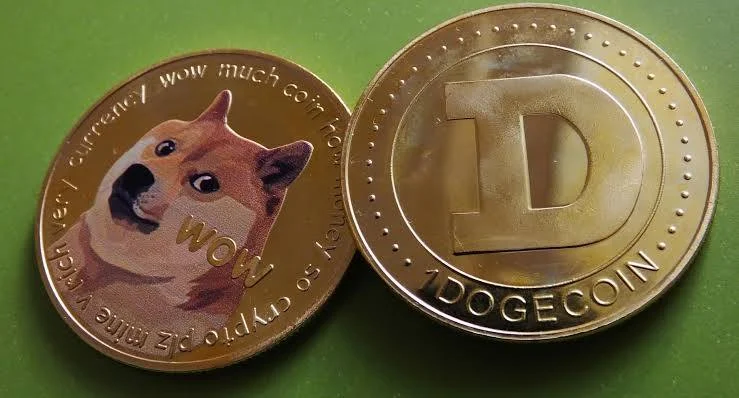
The coin has also gained global attention due to support from influential figures like Elon Musk, whose tweets and public endorsements have significantly boosted its visibility and price movements. This kind of exposure has helped Dogecoin maintain relevance even in a highly competitive market.
Another major strength is its fast transaction speed and low fees, which make it practical for everyday use. While many cryptocurrencies focus on advanced features, Dogecoin excels in being a fun, fast, and friendly digital currency.
However, Dogecoin does have limitations. It lacks a clear long-term development roadmap compared to more advanced projects, and its value is often influenced by social media trends rather than fundamental technology.
Why it’s popular:
- Massive community
- Backed by influencers like Elon Musk
- High liquidity
Pros:
- Easy to trade
- Strong community support
Cons:
- Limited real utility
- Highly volatile
3. Polygon – Best Layer-2 Scaling Project
Polygon helps Ethereum scale faster and cheaper. Polygon has quickly become one of the most important projects in the crypto space, especially for solving the scalability issues of Ethereum. As a Layer-2 scaling solution, Polygon is designed to make Ethereum faster, cheaper, and more efficient—without compromising security.
One of Polygon’s biggest advantages is its ability to reduce transaction fees significantly. While Ethereum can sometimes have high gas fees during network congestion, Polygon allows users to complete transactions at a fraction of the cost. This makes it highly attractive for developers building decentralized applications (dApps), NFT platforms, and DeFi projects.

Polygon also offers high-speed transactions, capable of processing thousands of transactions per second. This scalability is crucial for mass adoption, especially in areas like gaming, finance, and Web3 applications. Many popular projects have already integrated Polygon to improve performance and user experience.
Another strong point is its compatibility with Ethereum. Developers can easily migrate their projects from Ethereum to Polygon without needing to rebuild everything from scratch. This seamless integration has helped Polygon grow rapidly and establish a strong ecosystem.
Additionally, Polygon is continuously expanding with advanced technologies like zk-rollups and sidechains, which further enhance scalability and security. Its long-term vision focuses on becoming the “Internet of Blockchains” for Ethereum.
However, like any Layer-2 solution, Polygon depends heavily on Ethereum’s base layer. If Ethereum faces major issues, it can indirectly affect Polygon as well.
Why it matters:
- Ethereum adoption is growing
- Layer-2 solutions are essential
- Strong developer activity
Pros:
- Real-world utility
- Strong partnerships
Cons:
- Competition from other scaling solutions
4. VeChain – Best for Real-World Use
VeChain focuses on supply chain tracking. VeChain is one of the few cryptocurrencies that focuses heavily on real-world business applications, especially in supply chain management and enterprise solutions. Unlike many purely speculative projects, VeChain is designed to solve practical problems such as product tracking, authenticity verification, and logistics transparency.
At its core, VeChain uses blockchain technology to allow businesses to track products from production to delivery. This is extremely useful in industries like food safety, luxury goods, pharmaceuticals, and manufacturing. For example, companies can verify whether a product is genuine or counterfeit by scanning a code linked to VeChain’s blockchain. This builds trust between businesses and consumers.
Another unique aspect of VeChain is its dual-token system:
- VET (used for value transfer)
- VTHO (used for transaction fees)
This structure helps stabilize costs and makes the network more predictable for businesses. Unlike volatile fee systems in other blockchains, VeChain ensures consistent and affordable transactions, which are essential for enterprise adoption.
VeChain has also partnered with several major global companies and organizations, strengthening its credibility and real-world use cases. Its focus on collaboration rather than hype makes it a strong long-term project.
Additionally, VeChain uses a proof-of-authority (PoA) consensus mechanism, which provides faster transactions and higher efficiency compared to traditional systems. This makes it well-suited for large-scale business operations.
However, VeChain is more centralized compared to some other cryptocurrencies, which may concern users who prioritize decentralization.
Why it’s unique:
- Used by businesses
- Real-world adoption
- Enterprise partnerships
Pros:
- Practical use case
- Strong partnerships
Cons:
- Slower price growth
5. Shiba Inu – Best Meme Coin Alternative
Shiba Inu is often called the “Dogecoin killer.” Shiba Inu has emerged as one of the most popular alternatives in the meme coin space, often positioned as a competitor to Dogecoin. While it started as a fun, community-driven project, Shiba Inu has evolved into a broader ecosystem with multiple use cases, making it more than just a typical meme coin.
One of the key strengths of Shiba Inu is its strong and passionate community, often referred to as the “Shib Army.” This community plays a major role in promoting the project, driving adoption, and maintaining its relevance in the crypto market. Social media buzz and viral trends have significantly contributed to its rapid growth.
Unlike many meme coins, Shiba Inu has expanded its ecosystem by introducing features like ShibaSwap (a decentralized exchange), NFTs, and even plans for a metaverse project. These additions give it more utility compared to traditional meme coins, which usually lack real functionality.
Another appealing factor is its low price per token, which attracts new investors who want to hold large quantities of coins with a small investment. While price alone doesn’t determine value, it creates a psychological appeal for beginners entering the crypto market.
However, Shiba Inu remains a highly volatile asset, heavily influenced by market sentiment, hype, and community activity rather than strong fundamentals. Investors should approach it with caution and avoid expecting guaranteed long-term returns.
Why investors like it:
- Huge community
- Low price per token
- DeFi ecosystem growing
Pros:
- High growth potential
- Strong online hype
Cons:
- Highly speculative
- Depends on hype cycles
6. TRON – Best for Payments
TRON is used for fast and cheap transactions. TRON has positioned itself as one of the most efficient blockchain networks for fast and low-cost digital payments. Designed to handle high transaction volumes, TRON focuses on making crypto transfers quick, scalable, and affordable, which is essential for everyday use.
One of TRON’s biggest advantages is its near-zero transaction fees. Unlike many other blockchains, where fees can become expensive during peak times, TRON allows users to send funds at minimal cost. This makes it especially popular for transferring stablecoins like USDT across exchanges and wallets.
Another key strength is its high transaction speed. TRON can process thousands of transactions per second, making it much faster than older networks. This speed ensures smooth payments without delays, which is crucial for real-world financial applications.
TRON also supports smart contracts and decentralized applications (dApps), allowing developers to build payment systems, DeFi platforms, and digital services on top of its network. Its growing ecosystem has attracted a large user base, particularly in regions where fast and cheap transactions are a priority.
Additionally, TRON uses a delegated proof-of-stake (DPoS) consensus mechanism, which improves efficiency and scalability. This system enables the network to maintain high performance while keeping operational costs low.
However, TRON has faced criticism regarding its level of decentralization and governance structure. Some argue that it is more centralized compared to other blockchain networks, which may be a concern for users who prioritize decentralization.
Key features:
- Low fees
- High transaction speed
- Strong stablecoin ecosystem
Pros:
- Widely used
- Efficient blockchain
Cons:
- Centralization concerns
7. Algorand – Best for Technology
Algorand focuses on speed and security. Algorand is widely recognized as one of the most technologically advanced blockchain platforms in the crypto space. Built with a strong focus on speed, security, and decentralization, Algorand aims to solve the “blockchain trilemma” — the challenge of achieving all three without compromise.
At the core of Algorand is its unique Pure Proof-of-Stake (PPoS) consensus mechanism. Unlike traditional systems, PPoS randomly selects validators, ensuring both fairness and high security. This approach allows Algorand to process transactions quickly while maintaining a decentralized network, making it highly efficient for real-world applications.
One of Algorand’s standout features is its instant transaction finality. Transactions are confirmed in seconds and cannot be reversed, which is critical for financial systems and enterprise use. Combined with very low transaction fees, this makes Algorand ideal for payments, decentralized finance (DeFi), and large-scale applications.
Algorand also supports smart contracts and decentralized applications (dApps), enabling developers to build everything from financial platforms to digital identity systems. Its infrastructure is designed for scalability, meaning it can handle a growing number of users without slowing down.
Another major strength is its strong academic foundation. The project was founded by Silvio Micali, a renowned cryptographer and Turing Award winner, which adds credibility and trust to its technological design.
However, despite its strong technology, Algorand has faced challenges in terms of adoption and market visibility compared to more popular blockchains.
Why it stands out:
- Fast transactions
- Strong tech foundation
Pros:
- Scalable
- Energy efficient
Cons:
- Lower hype compared to others
8. Flare – Underrated Pick
Flare brings smart contracts to multiple blockchains. Flare is one of the most underrated projects in the crypto space, offering a unique approach to bringing more utility and interoperability to blockchain networks. While it may not be as widely known as major cryptocurrencies, Flare focuses on solving a key limitation in the industry—access to reliable external data.
At its core, Flare is designed to enable smart contracts for blockchains that don’t natively support them, such as XRP. This opens up new possibilities for developers and users, allowing assets from different networks to be used in decentralized finance (DeFi) applications and other advanced use cases.
One of Flare’s standout features is its decentralized oracle system, known as the Flare Time Series Oracle (FTSO). This system provides accurate, real-time data (like prices and market information) directly to the blockchain without relying on centralized sources. This is crucial for building secure and reliable DeFi platforms.
Flare also emphasizes interoperability, meaning it allows different blockchains to connect and share data more easily. This cross-chain functionality is becoming increasingly important as the crypto ecosystem grows and becomes more interconnected.
Another advantage is its focus on low-cost and scalable transactions, making it suitable for developers who want to build efficient applications without high fees.
However, Flare is still a relatively new project and is in the early stages of adoption. As a result, its ecosystem is not as mature as larger blockchains, and it may take time to reach its full potential.
Why it’s interesting:
- Unique interoperability
- Still early-stage
Pros:
- High potential
- New ecosystem
Cons:
- Still developing
Comparison Table
| Crypto | Best For | Risk Level | Growth Potential | Use Case |
|---|---|---|---|---|
| Cardano | Long-term investing | Medium | High | Smart contracts |
| Dogecoin | Community/hype | High | Medium | Payments/meme |
| Polygon | Scaling Ethereum | Medium | High | Layer-2 |
| VeChain | Real-world use | Medium | Medium | Supply chain |
| Shiba Inu | Meme growth | Very High | High | DeFi/meme |
| TRON | Transactions | Low-Medium | Medium | Payments |
| Algorand | Technology | Medium | Medium | Blockchain infra |
| Flare | New innovation | High | High | Interoperability |
How to Choose the Best Crypto Under $1
Here’s a simple strategy:
1. Don’t Invest in Just One Coin
Example:
- 40% in strong projects (Cardano, Polygon)
- 30% in mid-risk (VeChain, Algorand)
- 30% in high-risk (Shiba Inu, Dogecoin)
2. Check These 4 Factors
Before investing, always check:
- Market cap
- Use case
- Community strength
- Development updates
3. Avoid This Beginner Mistake
Don’t buy a coin just because:
- It’s cheap
- It’s trending on social media
Cheap coins can still crash.
Pros and Cons of Investing in Crypto Under $1
Pros
✔ Low entry cost
✔ High growth potential
✔ Good for beginners
✔ Opportunity for big returns
Cons
✘ High risk
✘ Many projects fail
✘ Price manipulation possible
✘ Requires research
Real Example (Simple Math)
Let’s say you invest $100:
- Coin price = $0.10
- You get 1,000 coins
If the price becomes $1:
- Your $100 → $1,000
That’s a 10x return.
But remember:
- It can also go to $0
Smart Tips for 2026
- Focus on utility coins, not just memes
- Follow crypto news regularly
- Use trusted exchanges
- Don’t invest money you can’t afford to lose
- Think long-term (1–3 years)
FAQs
1. Which crypto under $1 has the most potential in 2026?
Coins like Cardano, Polygon, and VeChain are considered strong due to utility and adoption.
2. Can a crypto under $1 reach $100?
Yes, but it depends on market cap. Many low-priced coins have a large supply, making $100 unlikely.
3. Is investing in cheap crypto safe?
No. It’s high risk, high reward. Always diversify.
4. Should beginners invest in crypto under $1?
Yes, but start small and focus on learning first.
5. How much should I invest?
Only invest what you can afford to lose—especially in volatile assets.
6. Are meme coins worth it?
They can give quick profits but are risky. Balance them with strong projects.
8. Can crypto under $1 really make big profits?
Yes, low-priced coins can deliver high returns if they grow. For example, a coin moving from $0.10 to $1 gives a 10x return. However, the risk is also high.
9. Is cheap crypto always a good investment?
No. A low price does not mean a coin is undervalued. You should always check:
- Market cap
- Use case
- Team and development
10. Which crypto under $1 has the highest growth potential?
Coins like Shiba Inu and Flare may offer high growth potential, but they also come with higher risk compared to established projects.
11. Is it safe to invest in crypto under $1?
It is not completely safe. These coins are often volatile and can lose value quickly. Always invest carefully and diversify your portfolio.
12. How much should I invest in low-cost crypto?
Start small. Only invest money you can afford to lose, especially if you are a beginner.
13. Where can I buy crypto under $1?
You can buy these coins on popular exchanges like:
- Binance
- Coinbase
- Bybit
14. Can a crypto under $1 reach $100?
It is possible, but very rare. It depends on the coin’s total supply and market cap. Many cheap coins cannot reach $100 due to a large supply.
15. Are meme coins good investments?
Meme coins like Dogecoin and Shiba Inu can give quick profits, but they are highly risky and depend heavily on hype.
16. Should beginners invest in crypto under $1?
Yes, but with caution. Beginners should:
- Learn basic crypto concepts
- Diversify investments
- Avoid putting all the money in one coin
17. What is the biggest risk of cheap cryptocurrencies?
The biggest risk is project failure. Many low-cost coins disappear or lose value over time.
18. How do I choose the right crypto under $1?
Look for:
- Strong use case
- Active development
- Growing community
- Real partnerships
Conclusion
Finding the best crypto under $1 to invest in 2026 is not about chasing hype—it’s about spotting projects with real potential.
If you want a balanced approach:
- Choose strong projects like Cardano and Polygon
- Add some high-risk coins like Shiba Inu
- Diversify your portfolio
Crypto under $1 can deliver massive returns—but only if you invest smartly.

